

At SUPERHEAT we aim to make steel reheating before hot rolling more efficient and less dependent on fossil fuels. The project is built around two connected steps: first, a directly implementable solution for existing industrial furnaces; second, a pathway that prepares the same concept for operation with hydrogen and hydrogen blends, supporting deeper decarbonisation over time.
Steel slabs, billets or blooms pass through a reheating furnace that brings the material to the temperature needed before entering the rolling mill. This is the process stage where SUPERHEAT intervenes.
CO₂
emissions
fossil fuel
use
energy
efficiency
retrofit in
existing
furnaces
product
quality
Decarbonising reheating without losing industrial performance
Using partial electrification for cleaner hot rolling processes
Steel reheating before hot rolling takes place under demanding industrial conditions and requires very high temperatures. This makes it difficult to reduce emissions without affecting furnace performance, production stability or product quality. SUPERHEAT responds to this challenge by exploring ways to reduce fuel use, introduce electricity into reheating and prepare the ground for hydrogen-based decarbonisation in existing furnace environments. Its objectives combine lower fossil fuel dependence and higher efficiency with the practical requirements of retrofit, stable operation and product quality.
A new concept for steel reheating
Electric air superheating is integrated into furnace combustion to reduce fuel use
Our concept integrates electric superheating modules into the combustion system of a reheating furnace. Electricity is used to raise the temperature of combustion air before it enters the eBurner, helping reduce fuel demand while remaining compatible with industrial furnace operation. The system is designed for retrofit and prepared for operation with hydrogen and hydrogen blends.
Scroll down to know more about the project ↓
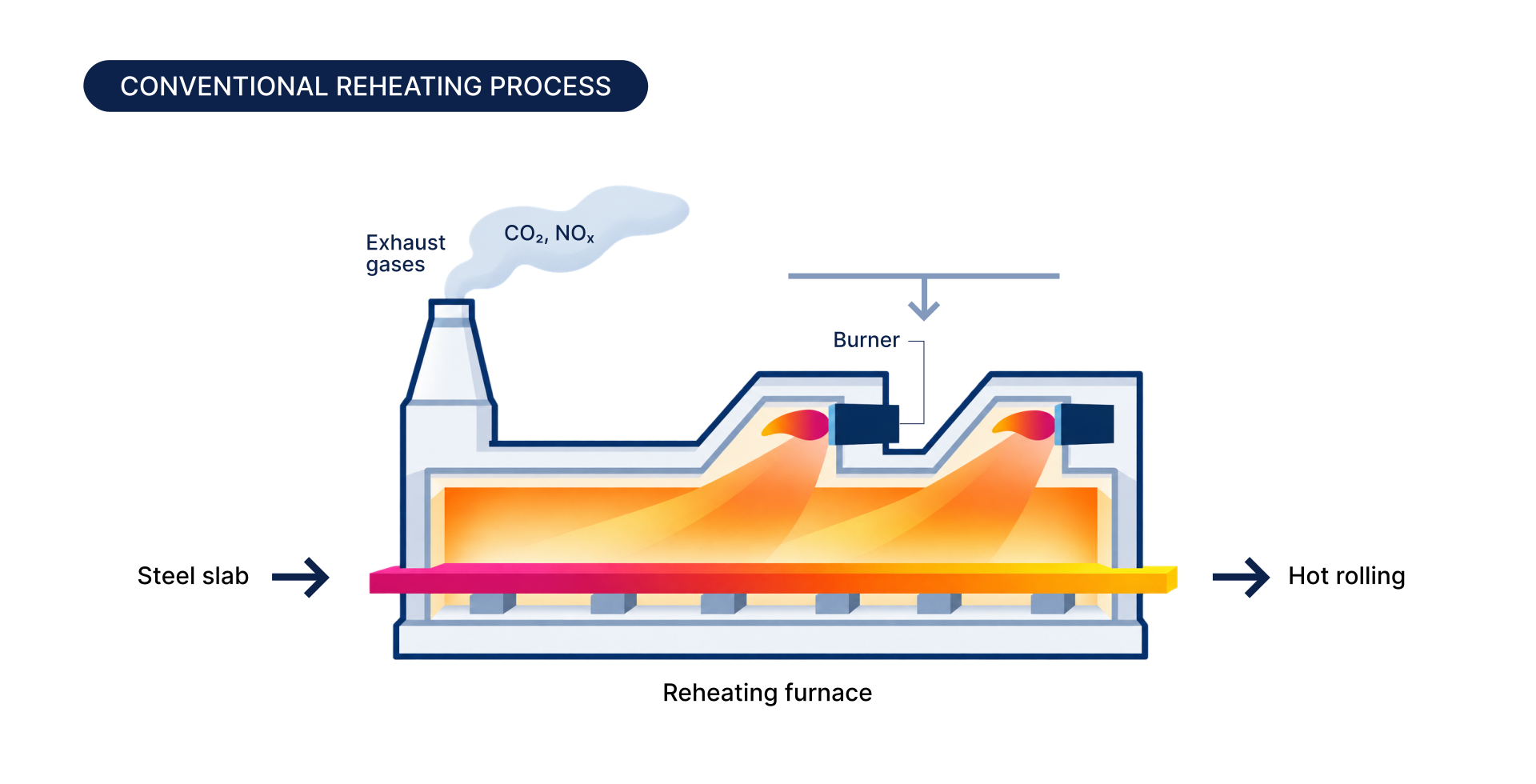
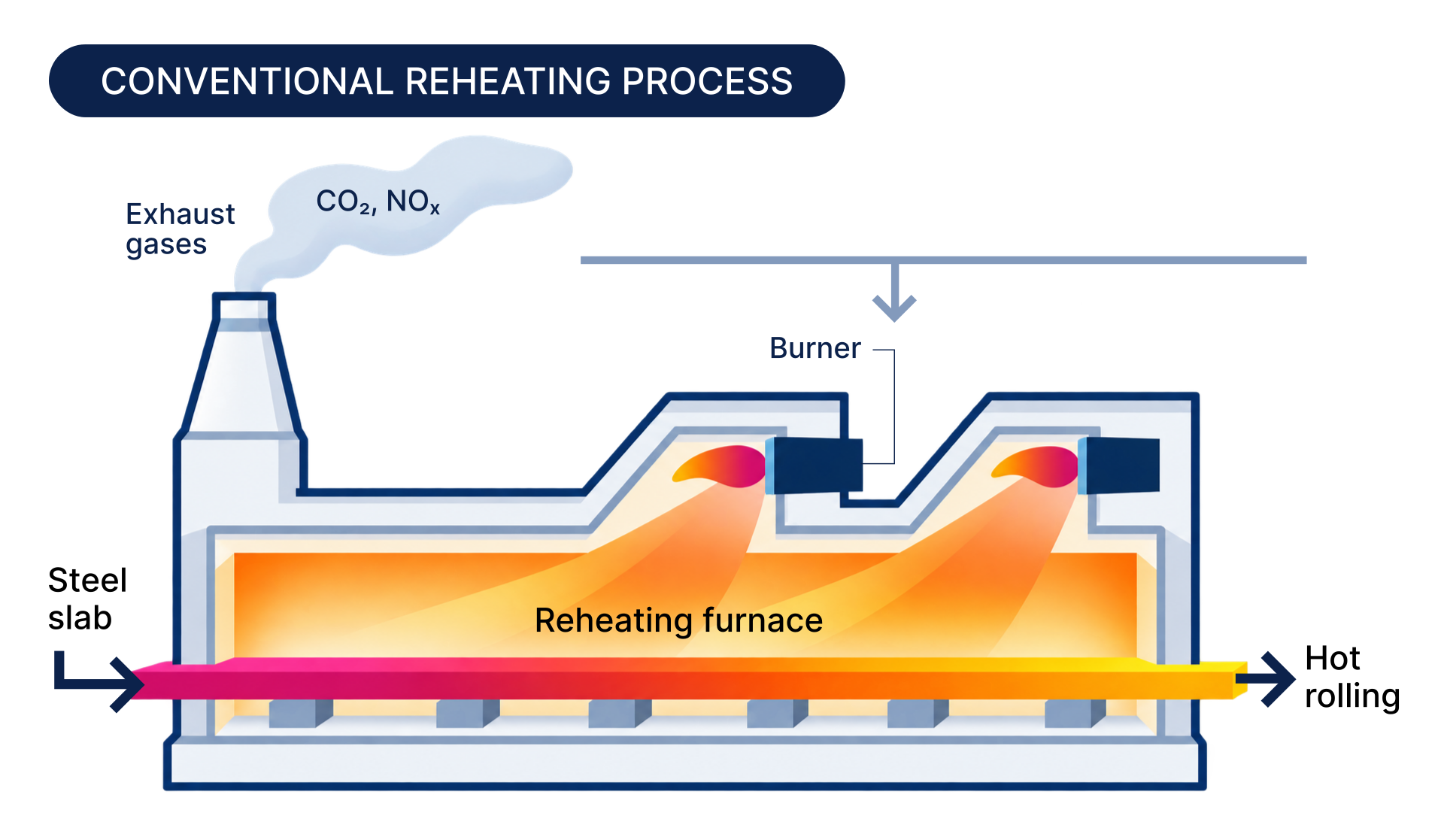
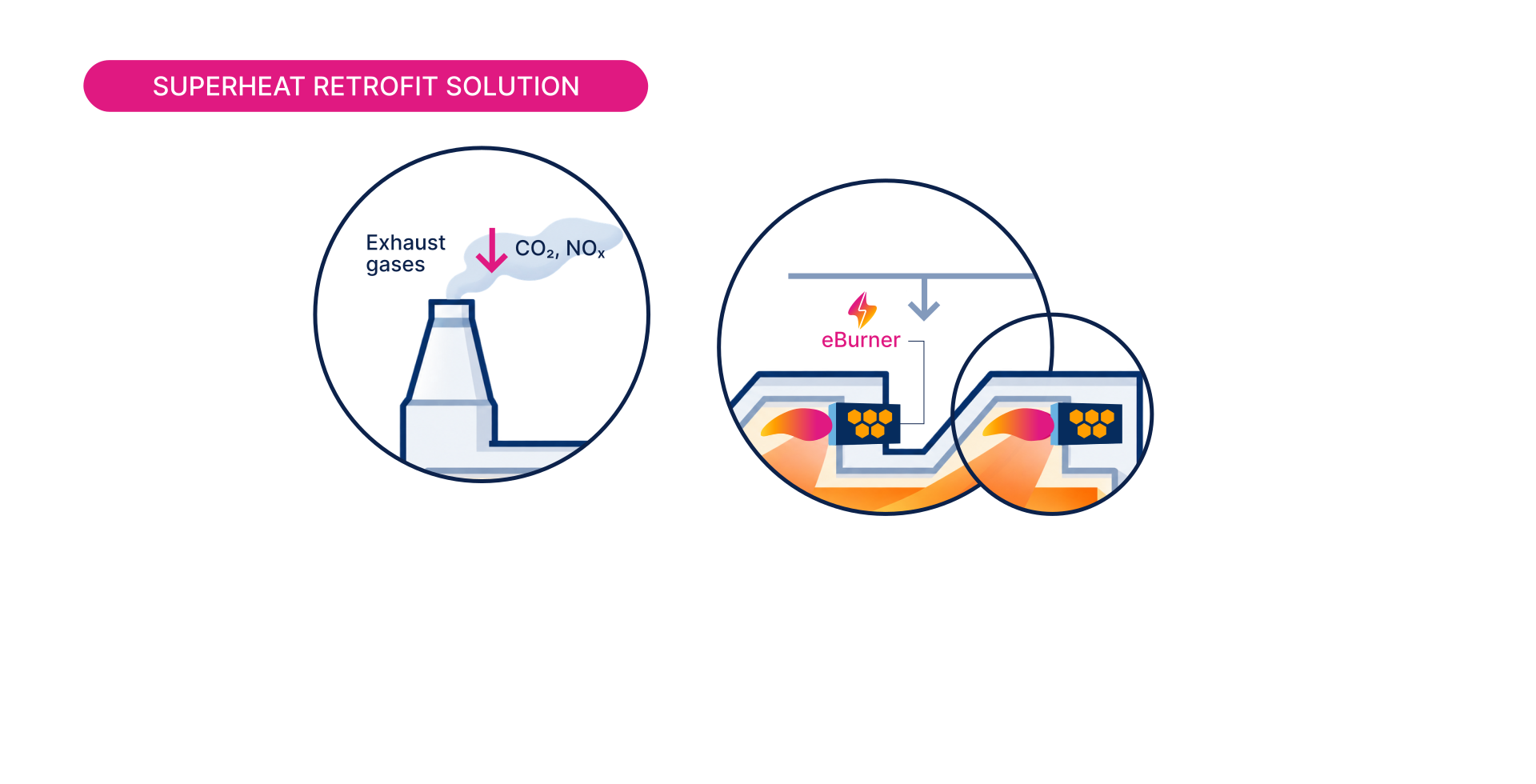
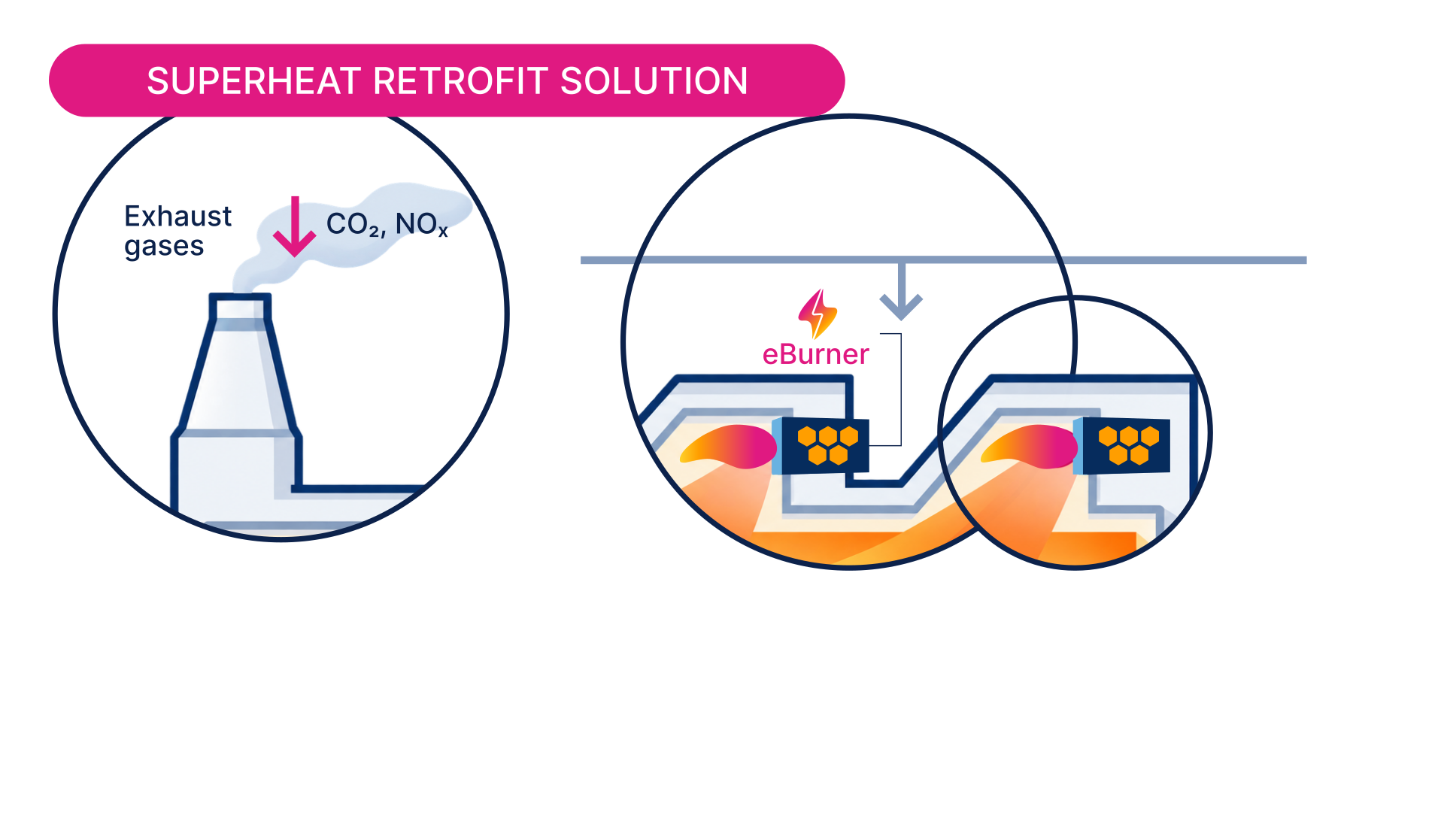
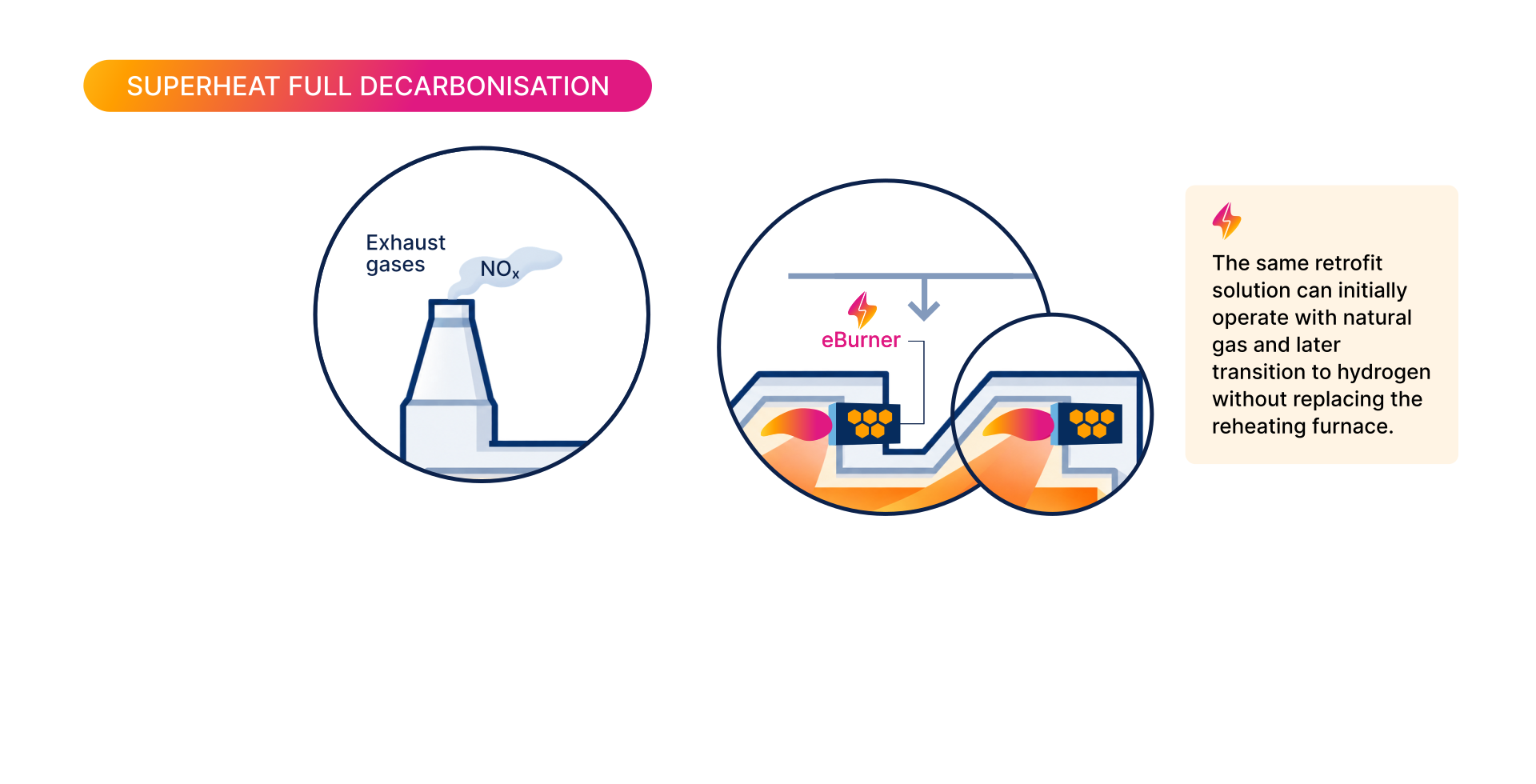
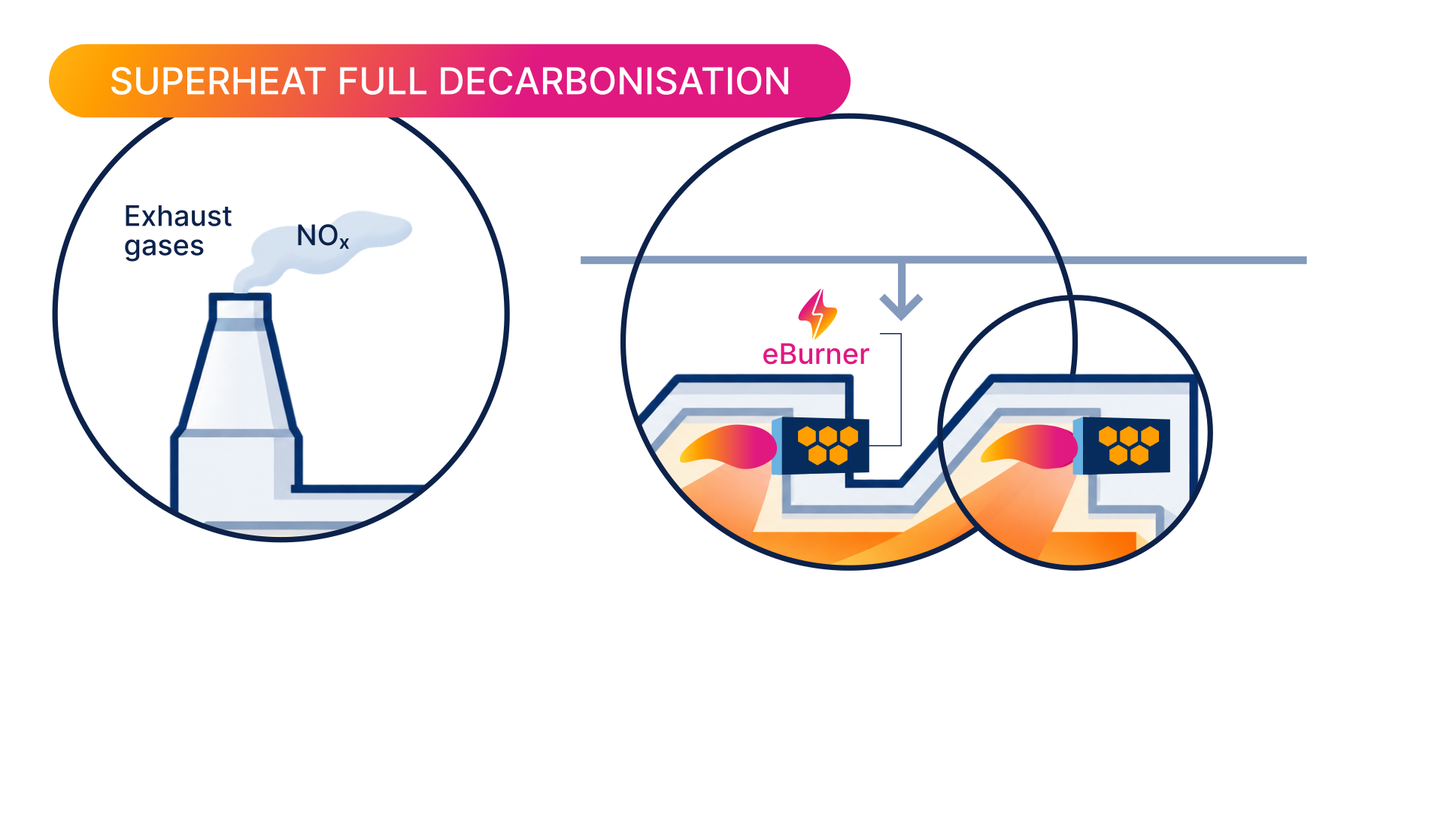
*The same retrofit solution can initially operate with natural gas and later transition to hydrogen without replacing the reheating furnace.
From concept development to industrial demonstration
Working towards real-furnace implementation and replication assessment
SUPERHEAT is being validated in two complementary industrial environments, demonstrating the flexibility of the technology across different steel products and production conditions.